
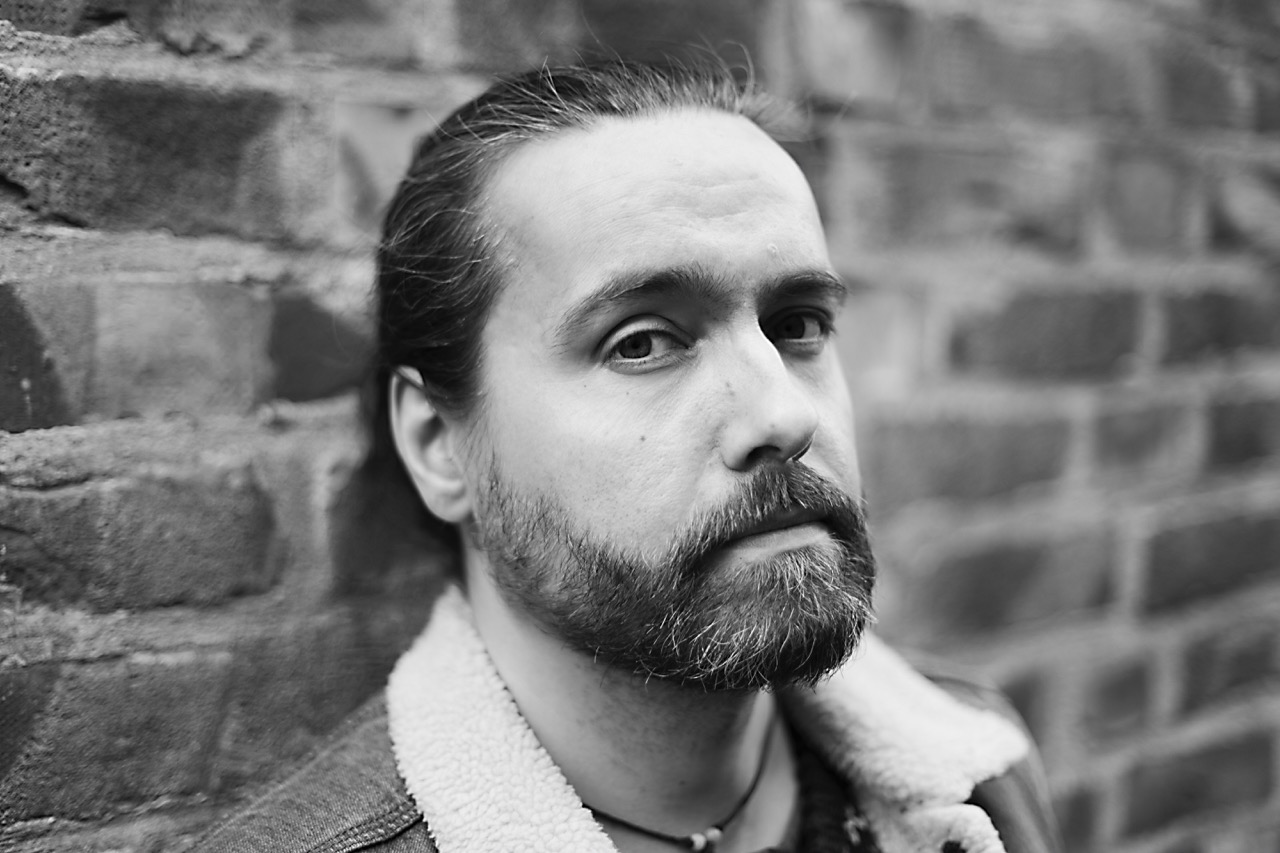
holon is the musical project of Norwegian songwriter, multi-instrumentalist, and producer Ronny Pedersen, based in Trondheim. Blending progressive rock, ambient textures, cinematic soundscapes, and introspective songwriting, holon explores themes of love, loss, transformation, and reflection.
Ronny writes, performs, records, and produces the music from his home studio, collaborating with longtime drummer Geir Anfinn Halland Johansen. holon’s music rewards deep listening, offering immersive soundscapes that balance emotional honesty with musical exploration.
Interview below.
What advice would you give to people just starting out in the music industry?
My biggest advice would be to slow down and be patient. Learn your craft properly and allow yourself time to grow. It’s very tempting to compare yourself to others or chase quick validation, but the most sustainable path is building something that feels honest and meaningful to you.
Also, understand that making music and building a career around music are two very different things. Try to learn both – but don’t let the business side steal the joy of creating.
What were your musical influences growing up?
Growing up, my influences covered a wide range. Early on it was classic rock and metal – bands like Metallica, Guns N’ Roses, and later Dream Theater, especially Images & Words, which had a huge impact on me. Around the same time, I discovered Frank Zappa, who completely expanded my idea of what music could be.
As I got older, my taste broadened into progressive rock, jazz fusion, ambient music, folk, and more experimental sounds. Today, my listening habits are all over the place – and I see that as a strength.
Who did you watch at your first ever gig you attended?
The first gig I really remember attending was Dream Theater, during my first year of studies. I took the train from Trondheim to Oslo, which is about a 6–7 hour journey each way, just to see them live. None of my friends were particularly into Dream Theater at the time, so I travelled alone.
I didn’t even have a place to stay in Oslo. After the concert, I just wandered around the city through the night until morning, when I could catch the train back. It was one of those moments where you realise you’ve truly moved away from home – suddenly you’re free to just do things like that, purely because you want to. That feeling of independence and freedom is something I still remember very clearly.
How did that gig make you feel?
The concert itself was awesome – seeing a band I loved so deeply live for the first time was a huge experience. That said, the venue wasn’t great, and I remember there were quite a few sound issues, especially with the vocals getting drowned out by the rest of the instruments.
Oddly enough, that became a valuable lesson. Even when a band consists of incredible musicians, a live experience can be very different from what you hear on record. It taught me early on that sound, space, and context matter a lot, and that translating music from studio to stage isn’t always straightforward.
Still, the experience as a whole was unforgettable – not just because of the music, but because of where I was in life at that moment. It reinforced how important music was to me, enough to travel across the country alone just to hear it live.
What was the hardest obstacle you had to overcome to get to where you are now in music?
One of the hardest things has been staying committed long-term. Life happens – work, responsibilities, relationships – and keeping a creative project alive alongside all that takes persistence.
Another challenge has been learning to trust my own voice instead of constantly second-guessing myself. That confidence doesn’t come quickly; it’s built slowly through experience.
What was your best performance?
For me, the most meaningful performances have been small, intimate acoustic shows. Those moments where the room is quiet and present – where you can feel people really listening – are the ones that stay with me. It’s not about spectacle; it’s about connection.
How do you feel about sampling, do you use sampling?
I think it’s important to recognise that sampling exists on a spectrum. On one end, you have sampling complete grooves, themes, or loops – which is common in certain genres and can be a valid creative approach in its own right. On the other end, you have sample libraries, which are essentially tools that let you access the sound of real instruments while working entirely “in the box” on a computer.
That second type is something I use a lot, and I’m very much in favour of it. For someone like me, who writes and produces music independently, sample libraries make it possible to arrange songs with a wide range of instruments without completely ruining yourself financially. There’s obviously nothing quite like recording real musicians – that human interaction and nuance is special – but if you don’t have the budget to hire an orchestra or a string section, sampling lets you realise what you hear in your head anyway.
It’s also incredibly useful during the arrangement phase. Having realistic instrument sounds at hand helps you think orchestrally and make better musical decisions early on.
In a way, this isn’t a new idea at all. Frank Zappa was one of the early adopters of the Synclavier back in the ’80s, which allowed him to do similar things – it was just insanely expensive at the time. Today, comparable tools are available to anyone with a laptop, which I think is fantastic. So yes, I’m very much on board with sampling when it’s used creatively and thoughtfully.
If you could choose from a historical gig, from any era, who would you have seen and why?
I would have loved to see Frank Zappa live in the 1970s. His concerts were part music, part theatre, part controlled chaos. Seeing that level of musicianship mixed with humour and unpredictability firsthand would have been unforgettable.
Do you have a moment you could share from previous gigs or recording experiences?
One moment that really stands out happened during a train journey in India, and it’s one of those experiences you could never plan – it just happens.
A friend and I were travelling from Agra (home of the Taj Mahal) to Bodh Gaya, where the Buddha is said to have had his awakening. It was extremely foggy that day, and at the train station we were told that the train we had reserved tickets for was cancelled. So we bought tickets for a local train with no reserved seating instead.
While we were sitting on that train, waiting to depart, another train suddenly rolled into the station. It had the same name as the one we originally had tickets for, so we assumed this must be it. Without thinking too much, we grabbed our backpacks and guitars and made a quick decision to go for it. My friend actually crossed the train tracks to reach the other platform, while I ran over the bridge. We managed to jump on just as the train started moving.
Once on board, we started looking for our coach. Every time the train stopped, we moved forward to the next coach, checking the numbers against our tickets. We did this over and over – until we reached the very last coach. That’s when we realised something was off. This coach turned out to be the disabled coach.
Eventually, we discovered the truth: this wasn’t even today’s train – it was yesterday’s train, running about 24 hours late. Which meant we didn’t actually have valid tickets at all. At that point, getting off didn’t seem like a great option, so we stayed where we were.
The disabled coach was completely packed. There were no proper seats, just a few beds at one end, and most people were sitting on the floor. There was a mix of people who were actually disabled and others who had clearly snuck on the train, just like us. When disabled passengers needed to get to the toilet at the other end of the coach, people would literally carry them over the crowd, almost like stage diving.
At some point, someone noticed that we had guitars. A guy asked if we knew “Hotel California.” We said yes, took out the guitars, and started playing. People gathered around, smiling, listening. After a while, some of the Indian passengers started singing traditional Indian songs, and suddenly it turned into this completely spontaneous jam session – guitars, voices, clapping, laughter.
It didn’t feel like a gig in the traditional sense at all, but it was one of the most powerful musical moments I’ve ever experienced. A train full of strangers, languages, backgrounds – all connected through music, completely unplanned.
It’s one of those experiences I’ll never forget – and one I could never have anticipated in a million years.
Where and when is your next gig?
There’s nothing scheduled at the moment. holon is primarily a studio-based project, and my focus right now is on releasing new music. If and when live shows happen again, I want them to feel intentional and immersive.
What’s your favourite song and why?
That’s an almost impossible question for me, because I don’t really experience music that way. I have many favourite songs, and ranking them feels artificial – it really depends on mood, time, and context. So instead of picking one, I’ll mention a few that have stayed with me over the years.
Joni Mitchell – “Both Sides Now” is one of them. The lyrics are incredible – reflective, honest, and deeply human – and the atmosphere of that song is just timeless. It feels like wisdom set to music.
Then there’s The Beach Boys – “God Only Knows.” The melody, the chord changes, and the harmonies are on another level. And that canon at the end… it just moves in and lives in your head rent-free for a very long time. Pure songwriting brilliance.
Another one is Radiohead – “All I Need.” I love the simple ingenuity of that song – the way it builds gradually, almost imperceptibly, until it hits you emotionally. Combined with Thom Yorke’s haunting, vulnerable vocal delivery, it’s one of those tracks that never loses its impact.
So yeah, I don’t really have one favourite song – but these are a few that have shaped how I listen to, feel, and think about music.
Why do you make music?
Because creativity is my oxygen. I need to create in order to feel alive. Music is how I express myself and put something into the world that truly comes from me – a kind of legacy.
At the same time, creating music is deeply meditative. When I’m in that flow state, everything else fades away. It’s where I feel most present and connected.
Talk us through your songwriting process.
Most songs start very casually, usually with me noodling on an acoustic guitar when I’m bored, not actively trying to write anything. At some point, a chord progression, melody, or rhythmic idea catches my attention, and that’s when I know there’s something worth exploring.
From there, I take the idea into the studio and start building layers slowly – harmonies, textures, arrangements – letting the song reveal what it wants to become rather than forcing it in a particular direction. I really enjoy that phase, where the music gradually finds its own shape.
Lyrics usually come later and often take the longest time. That part requires focus and patience, and sometimes a fair amount of struggle. It’s about staying in the process, even when it feels uncomfortable or unclear. Inspiration might light the initial spark, but persistence is what actually finishes the song.
If you could offer one small bit of advice for your past self, what would you say?
I’d tell myself to have confidence and patience. I spent quite a bit of time fooling around before I really understood how much joy and meaning I’d get from fully committing to making music.
Learning the craft is absolutely worth it – the deeper you go, the more rewarding it becomes. So I’d say: put in the effort, trust the process, and don’t rush it. The fun doesn’t disappear when you take things seriously – it actually grows.


